Archive for the ‘theology’ Tag
” Your opinion matters” or so I am told by all sorts of people who want me to fill in surveys or answer questions. But does it, really, and if so who to and why? As election season gets closer and closer the question will be asked more and more often. Of course to those looking for your vote or seeking to obtain it, your opinion is very important. Opinions are very important to those who want to sell us things, whether or not we want or need them. Consequently my opinion actually only matters to those who want something from me (except perhaps my close friends and family). Since our society is littered with people wanting others to buy, vote, or something similar, it is easy to get a false sense of the importance our opinions! This is exacerbated as our culture gives increasing priority to the rights of the individual and is decreasingly interested in truth. Ah, there you have it, truth, not your truth , my truth or any similar oxymoron, simply truth. The problem is that truth has, by definition, to be independent of any individual’s or group’s opinion.
If we really mean “you are entitled to your opinion” or that “your opinion matters” it must be said without the unspoken caveat that agreement with me is a pre-requisite. To require such agreement implies that “my opinion” has been exalted to the realm of truth. Politics is one of the best examples of this. Most thinking people have a broadly similar picture of the problems we face, but when it comes solutions, there are as many opinions as there are people. When our favorite sports team is losing, every fan has an opinion as to what the coach should do to solve the problems. In each case the opinions are sincerely held and supported by their own selection of evidence. When we are able to identify what are “opinions” and hold them as such, some of our most vitriolic arguments lose much of their bitterness. Does this means these opinions have no value? Certainly not, because it is by listening, respectfully, to what other people think that we learn (and maybe even change!)
As a Christian, recognizing the difference between opinion and truth is of great importance. Dr Albert Mohler has articulated what he calls “Tier One Issues.” These are matters held to be truths fundamental to our Christian faith. They include such things as such as the divinity of Jesus, along with his death and resurrection The fact that salvation is by faith alone in the redemption made available by that death and resurrection is truth we hold not to be subject in any way to opinions. This is the gospel! Other issues such as, the gifts of the spirit, baptismal practice and such, are subject to different opinions over biblical interpretation. Respect for such differences means that they should not be used to question the validity of another’s faith.
So do our opinions matter? Of course, because by listening to each others perspectives we learn and grow. It is however important to remember when sharing opinions, that ours have the same value as anyone else’s, whether in politics sport, religion or any other subject. However when it comes to what we hold to be truth, we must be able to explain why we hold them to be truth, not yours, mine, or indeed anyone else’s, simply truth that can be absolutely depended upon!
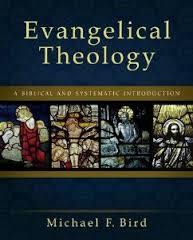
 Micheal Bird’s new volume “Evangelical Theology” promises to provide a unique and exciting contribution to the ever increasing multitudes of volumes written on the subject. Perhaps this uniqueness is best expressed in the final section of Part 1 of the book he suggests that we might consider
“… the goal of theology is not simply drawing up a list of propositions, but for us to engage in a performance of the divine drama and to experience the transformation of our imaginations so the we can know God better’
For many, both those who are academically inclined and those who are not, the clear understanding of the reasons for “doing theology” are difficult to articulate. In the opening section of this book the author does a masterful job of engaging these difficult and complex issues without either dumbing them down or rendering them outside the scope of a regular reader. He helps his readers in understanding the concept of Prolegomena by explaining “it ordinarily addresses questions like “Is there a God to be known? and How do we know God?” and then tells us “it is a bit like a shopping mall sign that says, you are here”.
He further makes the case for a specific “Evangelical Theology” holding the gospel as its central it is “ the rule of faith for evangelicals” . A clear definition of the gospel follows along with defense of the necessity of systematic theology despite his admission that it is a fallible attempt to systematize the central tenets of the Christian faith.
The section on the sources of theology is a robust defense of his contention that tradition, nature ,experience and even culture can and should be allowed to inform our study of theology while retaining the centrality of Scripture.
I certainly look forward to exploring this volume further an expect it to yield a great deal of stimulating thinking.
When He was on the way to the cross Jesus clearly envisaged a totally fresh approach to relationship for the future when he “comforted” his disciples.
I will talk to the Father, and he’ll provide you another Friend so that you will always have someone with you. This Friend is the Spirit of Truth. The godless world can’t take him in because it doesn’t have eyes to see him, doesn’t know what to look for. But you know him already because he has been staying with you, and will even be in you…The Friend, the Holy Spirit whom the Father will send at my request, will make everything plain to you. He will remind you of all the things I have told you. John 14:16-17,26 MSG
At first glance this does not seem comforting at all. Actually it seems entirely incomprehensible! Our relationships are dependent on our auditory and visual senses. However, neither eyes nor ears seem to have a significant role in the relational developments Jesus shares with his closest friends . But He clearly implies this “new” relationship will be better than their current experience of having Jesus physically present with them most of the time. How can this be? Centuries later we are still grappling for the answer.
And then there are the times He gives us a hint. Lying on a hospital bed waiting for surgery to remove my melanoma Maggie said to me that she had really sensed powerfully that these verses from Isaiah 43 were for us on that day; we read them out loud together and prayed them through.
Surgery completed and news of the melanoma having spread to my lymph nodes, I called my mother in the UK to give her the news. Within an hour she called back and said that as she was praying for us a passage from Isaiah came strongly to her mind. Yes it was the same verses from Isaiah 43:1-3a.
But now, O Jacob, listen to the LORD who created you.
O Israel, the one who formed you says,
“Do not be afraid, for I have ransomed you.
I have called you by name; you are mine.
When you go through deep waters,
I will be with you.
When you go through rivers of difficulty,
you will not drown.
When you walk through the fire of oppression,
you will not be burned up;
the flames will not consume you.
For I am the LORD, your God,
the Holy One of Israel, your Savior.
Did we “hear God or “see” him? No. Did He speak? Most certainly yes, and He made a point of reassuring us of that fact through my mother.
I am very aware that I have barely touched the reality and the mystery of this relationship that God has designed for me. However the amazing thing is that because it is not dependent on sight nor sound it can be real for each of us at the same time and all the time, regardless of our location! So let’s not give up asking Him to teach us how to experience the fullness of this new way of relating. Don’t you think, if Jesus says its better, ultimately it must be?
… and I am certainly not willing to consider Charles Barkley’s caveat “…but I doubt it!” Yet again I have reason to be grateful to the IVP Book club! A little while ago my selection included a copy of “Invitations from God” by Adele Ahlberg Calhoun. I did not pick it up at first but, at the recommendation of a friend, Maggie purloined my copy and began to read it. Pretty soon she was regaling me with quotes and finally insisting that I “really needed to read” this particular chapter. The title of the chapter “ An Invitation to Admit that I Might be Wrong.” I confess a little reluctance even though her recommendations are nearly always very worthwhile. However she was right and, you’ve guessed it, I was wrong!
As I mentioned during the sermon on Sunday I have now read this particular section of the book two or three times and I am ashamed to tell how many times I have recognized my own resistance in the pages. It strikes me how crucial this attitude is, not just for me, but how helpful it would have been for those who encountered Jesus during his three years of ministry. How often He tried to explain to them that He was not ignoring or abusing the law but fulfilling it. However their minds were made up and they were not willing to admit they might be wrong. Tragically our society today is riddled with people of all faiths and creeds (as well as none) who are similarly unwilling. The creationists who will give little credence to the discoveries of the research scientist and the biologist who will countenance any explanation of observed phenomena other than the existence of a supreme creator. But does that mean everything is optional and belief in truth is to be discouraged. I do not think so. A life in which we are unable to reach convictions and live by them would, in my opinion be colorless, confusing and perpetuate insecurity. Calhoun very helpfully explains it like this
This doesn’t mean we can’t know truth. It simply means we cannot be certain that our take on truth is absolute or that our judgments about others are absolutely right.
It is, however, our attitude that changes when we accept this invitation. We approach others with openness and receptivity that can only enhance and enable our witness for Jesus. We will find that we participate in conversations by really listening to others rather than using half an ear while our mind assembles the next facet of our irrefutable (of course!!) argument. One of the most challenging quotes from the chapter is the following:
The type of humility that admits you are wrong when you know you are wrong is confession. The humility that admits you might be wrong when you’re pretty sure you’re right is maturity. Without both types of humility, we become rigid and unteachable. Without both types of humility, relationships flounder and implode.
So the challenge for us is to locate those subjects upon which, for one reason or another, we are unwilling to consider the idea that we MIGHT be wrong and as the author encourages us, “Seek humility which acknowledges the limits of my knowing…” and “Seek teachability, which allows me to keep on growing and changing.”

 From the Zebra Bag